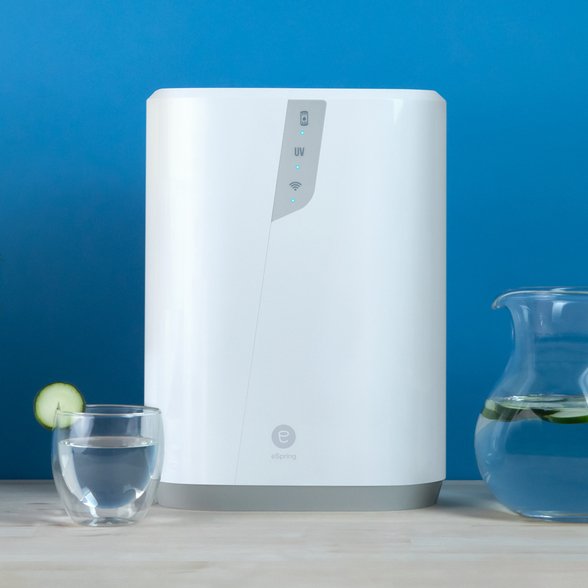
Amway eSpring Water Filter
Amway eSpring Water Filter: Read This Before You Even Think About Buying
If you’re here, you already suspect your tap water could be better—less chlorine taste, fewer “mystery” particles, and more peace of mind for your family. The big question isn’t “which filter has the longest spec sheet?” It’s: Which system will quietly protect your kitchen every single day without turning into a hassle? Is Amway eSpring Water Filter/Purification System the best option for your home? Read more to find out.
For many Malaysian households, that answer is eSpring—a compact, elegant unit that combines a high-density carbon block with UV light. It targets the contaminants you care about (chlorine by-products, VOCs, off-tastes/odours, microplastics, and PFAS like PFOA/PFOS), while keeping the good minerals in your water. And because there’s no storage tank or wastewater, it’s a system you can live with long-term—no tinkering, no babysitting.
Below is the buyer’s guide for Amway eSpring Water Filter or Purification treatment system I wish someone had handed me: persuasive (yes), but well researched — so you can commit with confidence.
First, get clear on your real objective
People buy water purifiers for different reasons. Yours might be one—or a blend—of these:
-
Taste & odour: You’re done with “pool smell” and metallic aftertastes. You actually want to make the water you drink every day taste pleasureable.
-
Visible particles: Rust from ageing condo tanks or sediment after pipe works. Have you looked at how disgusting the insides of metal pipes look?
-
Microbial peace of mind: You want a barrier against bacteria/viruses at the tap. You want the added convenience to be able to drink directly from the tap without boiling the water, and not worry about getting sick.
-
Modern contaminants: Microplastics and PFAS (PFOA/PFOS) are on your radar. Let’s get serious, microplastics can actually lead to many severe health problems and conditions and we are only BEGINNING to find out how devastating these elements are to our health.
-
Zero-TDS obsession: You want no limescale and near-distilled taste. (This is not a big problem in Malaysia, most of the readers of waterpurifier.com.my do not have this problem.)
If you want better taste, fewer chemicals, a barrier against viruses and bacteria, and protection against microplastics/PFAS—Amway eSpring Water Filter is easily your number 1 option, compared to other water purifying systems being sold in the local Malaysia market.
If your #1 goal is zero TDS (no kettle scale), choose RO for drinking or add a softener for the whole home.
Let’s be honest here: eSpring isn’t cheap. You’re paying for a high-density carbon block plus UV, serious engineering, and independent performance testing—not just a plastic housing with a simple screen. But that price buys something you actually feel every day: cleaner taste; a huge reduction in modern contaminants like microplastics and PFAS; a UV barrier against microbes; fast, tankless convenience; and zero wastewater, plus it consumes only on average RM 5 per year in TNB electricity bill.
When you spread the total cost over a year and the thousands of litres of water your family drinks and cooks with, it often comes down to cents per glass—far less than bottled water and infinitely more convenient. If this Amway eSpring water filter serves your home and family for the next 20 years, the small investment of RM 5850 (retail price – member price is RM 4680) is so, so small next to what we routinely spend on coffee, dining out, or phone upgrades—and unlike those, this upgrade quietly protects your household all day, every day. So yes, it’s expensive. It’s also a genuinely good investment—and worth it.
What makes eSpring different (and easy to love)
1) The Water Filtration Technology: Carbon block + UV
-
Compressed carbon block: Think of it as a microscopic maze that adsorbs chemical contaminants (chlorine by-products, many VOCs, selected pesticides) and physically filters small particles, including microplastics in the commonly tested size band.
What’s so special about Amway eSpring Water Filter’s carbon block water filter? — because the “secret sauce” in eSpring isn’t just “activated carbon,” it’s how that carbon block is engineered and layered.
-
Three-layer architecture (not a single sponge): eSpring’s current e3 cartridge stacks a non-woven prefilter (to catch the big stuff), a Defense Guard fine barrier (for sub-micron particles and clarity), and then an immobilized, compressed activated-carbon block that does the heavy chemical lifting. That architecture protects the carbon’s pores from clogging, keeps flow strong, and maximizes contact time so more contaminants actually stick to the carbon.
-
Sub-micron capture + broad chemical reduction: Amway’s spec sheet/brochure shows the e3 filter tackling microplastics (industry testing looks at ~0.5–1.0 µm; eSpring reports down to ~0.2 µm in marketing materials) and a long list of health-risk chemicals—lead, VOCs, pesticides/herbicides, pharmaceuticals, PFAS (incl. PFOA & PFOS), and even 1,2,3-TCP—at meaningful reduction levels. This is where a dense, immobilized carbon block beats loose granules: fewer bypass paths (“channeling”), more consistent adsorption.
-
Numbers you can verify: The official performance data sheet shows >99% reduction in Total PFAS (combined test) down to ~0.02 µg/L, and >99% reduction in microplastics within the 0.5–<1.0 µm test band. The system carries NSF/ANSI 42/53/401 listings (plus Class B UV under 55), and the NSF directory entry details the PFAS suite covered. In short: the claims aren’t just marketing copy—you can cross-check them.
-
Real-world usability baked in: It maintains a kitchen-friendly flow (about 2.6–2.8 L/min) and 5,000 L/1-year rated life per cartridge, so you get “set it and forget it” convenience rather than a science project under your sink. The smart indicator ties replacement to liters/time so you’re not guessing and performance doesn’t quietly drift.
-
Designed to work with UV (not instead of it): The carbon block handles chemicals and particles; the UV-C LED stage that follows is what inactivates microbes. The two are separated on purpose—so adsorption isn’t compromised, and you get microbial peace of mind without adding any taste-changing disinfectants.
Bottom line: What’s special is the combination of structure (layered/immobilized/compact), scope (170+ listed contaminants – which is market leading where no other water purifiers in Malaysia are able to purify against so many different contaminants, including PFAS and microplastics), and verifiable certifications—delivered at a speed and maintenance pattern you’ll actually live with. That’s why the eSpring carbon block feels different in daily use: clean taste, broad protection, and no fuss.
Now we go onto the second part of the filtration tech – the UV light in eSpring – the “microbe killer” half of eSpring.
-
UV-C LEDs, not a mercury bulb. The newest eSpring uses UV-C LED light, so there’s no mercury lamp to replace or dispose of, it’s instant-on, and it’s designed to last up to 10 years while using less power than the previous model.
-
Certified disinfection at kitchen-tap speeds. The system is NSF/ANSI 55 Class B certified at 0.75 GPM (~2.8 L/min), meaning it’s independently verified for UV microbial inactivation at real, usable flow rates (not just a trickle). info.nsf.org
-
High log reductions (what that means for you). eSpring publishes “up to” claims of 99.9999% bacteria, 99.99% viruses, and 99.9% cysts with its UV-C LEDs—exactly the stuff you want neutralized right at the tap, without chemicals or taste changes. Amway Support
-
Works with the carbon block. The carbon stage goes first (improves clarity and taste, reduces UV-absorbing compounds), then UV finishes the job on microbes—so you get broad chemical reduction and a physical microbe barrier in one pass. (Amway positions the product exactly this way: carbon for contaminants, UV for microorganisms.) Amway
-
Smart, low-fuss ownership. Flow-activated UV and a replacement indicator take the guesswork out; the LED only runs when water flows, preserving life and energy. Amway
Bottom line: eSpring’s UV-C LED gives you lab-grade microbial inactivation without chlorine taste, with long life and verified performance at everyday flow—one of the big reasons people stick with it once installed
2) Minerals in, wastewater out (as in, none)
-
eSpring doesn’t strip minerals, so water still tastes natural and “alive.”
-
No storage tank and no reject water, so there’s no constant waste stream or tank hygiene anxiety.
3) Real-world convenience
-
Fast flow: water flows through the eSpring water purifying system at 2.6L up to 2.8L rate per minute which is very practical.
-
Compact footprint: Countertop diverter or under-sink faucet—your call.
- Easily replace your eSpring’s filtration cartridge in just a few steps. You can replace the cartridge in just 2 minutes, once a year, no tools required.
-
Smart alerts: The unit tells you when the cartridge is due; you don’t have to guess.
Let’s talk about microplastics (the new anxiety)
You’ve seen the headlines: microplastics in bottled water, in tap water, even in rain. Here’s what matters for a buyer:
-
How removal works: eSpring’s dense carbon block acts as a tight physical barrier within the tested particle range, while its surface chemistry helps trap certain organics onto the carbon.
-
Expectations: You can meaningfully reduce microplastic counts in the tested size band (commonly centred around ~0.5–1.0 µm in industry protocols). Tiny nanoplastics below that are outside typical certifications—no system can honestly claim to “remove all plastics of all sizes.”
-
Why this matters: You’re not chasing perfection; you’re minimizing exposure in the range most practical at the kitchen tap. That’s a sensible, sustainable risk reduction.
And PFAS (PFOA/PFOS): why carbon matters more than hype
PFAS (also called “forever chemicals”) are persistent, fluorinated molecules used in non-stick coatings, stain guards, and firefighting foams. They’re detected in many water systems globally.
-
How removal works: High-quality activated carbon excels at adsorbing long-chain PFAS (like PFOA and PFOS). Short-chain PFAS are typically harder to capture, which is why choosing a system with broad PFAS reduction claims and a substantial carbon bed matters.
-
What you can responsibly claim: eSpring units are independently tested for PFAS reduction (including PFOA/PFOS) and publish model-specific performance data. Always verify the exact claims for your model on the official performance sheet or listings—that transparency is a strength, not a weakness.
-
What this means at the sink: Day-to-day, you’re not doing lab work—you’re making coffee and bottles. A system that significantly lowers PFAS in the water you actually drink is what changes outcomes for your household.
Here’s what you’re likely protecting by reducing microplastic exposure (through better filtration, fewer plastic bottles, less heating of plastics, etc.):
-
Heart & blood vessels: Human carotid-plaque research found people with detectable micro-/nanoplastics in their arterial plaques had a ~4.5× higher risk of heart attack, stroke, or death over ~34 months vs. those without detectable plastics. Cutting intake is a plausible way to lower that burden and associated vascular inflammation. PubMed
-
Lower chronic inflammation/oxidative stress: Lab and animal studies consistently show microplastics trigger inflammation and oxidative stress, processes tied to many chronic diseases. Reducing exposure likely eases that background load on your immune and metabolic systems. American Chemical Society Publications
-
Gut health & nutrient absorption: Reviews link exposure to gut irritation, dysbiosis, and barrier (“leaky gut”) changes. Less exposure may support a healthier microbiome and calmer GI tract. PubMed Central
-
Brain protection (precautionary): Animal work shows microplastics can disrupt the blood-brain barrier and harm neurons; human autopsy data now detects microplastics in brain tissue (association, not proof of harm). Lowering exposure is a prudent step while science catches up. PubMed
-
Reproductive & hormonal health (emerging evidence): Micro-/nanoplastics can carry or leach endocrine-disrupting chemicals (e.g., phthalates, BPA) and are suspected to affect fertility and hormonal axes; reducing exposure may help limit those risks. PubMed Central
-
Less bottled-water intake = fewer particles: A 2024 analysis found ~240,000 plastic particles per liter in popular bottled waters (≈90% nanoplastics). Switching to filtered tap water and reusable bottles can dramatically cut this route of exposure. National Institutes of Health (NIH)
-
General risk management: Health agencies (e.g., WHO) say human evidence is still developing, but advising exposure reduction is reasonable given ubiquity, detection in human tissues, and plausible mechanisms of harm. World Health Organization
If you want concrete steps: drink water purified by your home’s eSpring Water Purification System, avoid heating food in plastic, use glass/steel containers, and vent/clean to reduce airborne fibers at home.
Amway eSpring Water Filter vs RO (and others): the decision you’ll feel daily
| System Type | What you’ll love | What you’ll tolerate | Best fit |
|---|---|---|---|
| eSpring (Carbon + UV) | Fresh taste, microbe barrier, microplastics + PFAS reduction, no wastewater, fast flow, keeps minerals | Needs power for UV; won’t remove limescale | Families who want protection + convenience without zero-TDS obsession |
| RO (Reverse Osmosis) | Very low TDS, minimal scale in kettles, broad dissolved contaminant reduction | Slower flow, tank hygiene, reject water, usually flatter taste unless remineralized | Households fixated on zero-TDS or with very high dissolved solids |
| UF systems | No power, good for many bacteria | Virus protection varies; chemistry reduction more limited | Budget-minded users prioritizing microbes over chemical breadth |
| Pitcher carbon | Cheap, simple | Slow, small capacity, frequent changes | Singles/light use as a starter step |
**If you want low-maintenance confidence and real chemical/microbial coverage at good speed—eSpring is the system you’ll keep using. If you can’t stand any scale and crave near-distilled taste, pick RO for drinking (and accept the lifestyle trade-offs).
Objection handling (so you don’t talk yourself out of clean water)
“Will I forget to change the cartridge?”
The system prompts you. Put a calendar reminder for 10–12 months as a back-up. Treat it like an oil change: inexpensive insurance for your health.
“We sometimes get brown water after pipe works.”
Add a simple sediment pre-filter upstream. It’s a cheap “shock absorber” that protects any premium carbon block from rust bursts.
“Electricity near the sink worries me.”
Under-sink installs route neatly to an outlet; countertop units sit away from splash zones. A professional installer will help you plan a tidy, safe routing.
What ownership feels like (year 1 and beyond)
-
DAY 1: No more chlorine smell, tea and coffee taste much better, your kids start drinking more water every day.
-
Month 3: You start getting improvements in your quality of life because the taste of the water drastically helps reinforce your water drinking habit. (Actually in our modern, stressful daily life, a lot of us actually forget to drink enough water, and this can lead to health issues.)
-
Month 10–12: A light prompts cartridge change; you swap the eSpring cartridge out yourself in just minutes, no tools required.
-
Year 2–3: You realise this was one of your highest-ROI home upgrades because it quietly improved everything you drink and cook.
If you want to sanity-check the cost: divide the annual cartridge by your household’s glasses-per-day. You’ll likely land at pennies per glass for dramatically better water.
Let’s do a little bit of calculation so that we can justify this investment for your home:
eSpring Water Purifier cost: RM 5850
Yearly cartridge replacement cost: RM 743.80
10 years ownership cost = RM 5850 + 9 years of replacement for the cartridge RM 6694.2 = RM 12544.2
Yearly healthy water cost for your whole family = RM 1254.4
Daily healthy water cost for your whole family = RM 3.44 (which is cheaper than one cup of Teh Tarik nowadays)
For Only RM 3.44 a Day Get:
Day-to-day improvements
-
Cleaner taste & smell: Activated-carbon block strips chlorine/odour compounds so water, coffee and tea taste noticeably better. You and your kids actually start enjoying drinking water.
-
Microbial peace of mind: The UV stage inactivates bacteria/viruses/cysts at the tap—no chemicals, no boiled-water taste. You can now start drinking water from the tap without worrying about falling sick.
-
Modern-contaminant reduction: The dense carbon block targets microplastics (in the commonly tested size range) and PFAS (incl. PFOA/PFOS) alongside many VOCs, pesticides, and selected heavy metals/pharmaceuticals.
Lifestyle & convenience
-
Keeps natural minerals: TDS/hardness largely unchanged for a more “natural” taste.
-
Fast, tankless flow: Fill pots quickly; no storage tank to clean, no waiting.
-
No wastewater stream: Unlike RO, there’s no reject water.
-
Low-maintenance: Typical 1-year/5,000 L cartridge with a smart change indicator—“set and forget.”
Financial & environmental
-
Lower cost per glass than bottled water: After the upfront, the per-glass cost drops to cents.
-
Less plastic waste & logistics: Fewer bottles, fewer trips, smaller footprint.
Home setup flexibility
-
Countertop or under-sink options: Fits rentals or renovations; dedicated drinking faucet available.
-
Scales with your needs: Add a simple sediment pre-filter if your building has rusty tanks/pipes; pair with RO only if you want ultra-low TDS for espresso/scale control.
Expectation-setting (so you’re not surprised)
-
eSpring doesn’t soften water—kettle scale can remain (that’s minerals). If zero-TDS is your goal, add RO for that specific use.
-
The UV stage needs power. Plan a nearby outlet for under-sink installs.
Bottom line: with an Amway eSpring Water Filter, you get great-tasting water, a broad reduction of today’s worry-list contaminants (microplastics/PFAS), and a microbial barrier—delivered fast, tankless, and with minimal upkeep. It’s a practical upgrade you’ll actually keep using every day.
Malaysia-specific tips (so installation is drama-free)
-
Tap adapters: Many Malaysian taps fit a diverter; bring photos to your installer for adapter matching.
-
Under-sink elegance: A dedicated drinking faucet keeps your main tap unchanged.
-
Old condo tanks: A sediment pre-filter is worth it if you’ve seen rust/sand after outages.
-
Power point planning: For under-sink UV power, confirm an outlet; tidy cable routing is easy.
Micro-guide: how to buy with confidence today
-
Pick your layout: Countertop (fastest install) or under-sink (cleanest look).
-
Verify the exact model’s claims: Check the official performance sheet for PFAS (PFOA/PFOS) and microplastics reduction, plus chlorine/VOCs and microbial coverage.
-
Plan maintenance: One cartridge per year on average; set a reminder.
-
Decide on a pre-filter if your building plumbing is older.
-
Book installation and take before/after photos (taste tests are fun: line up tap vs eSpring vs bottled).
Frequently asked (persuasively honest) questions
Will Amway eSpring Water Filter remove every microplastic?
No system can promise that. eSpring targets the tested microplastic size band very very effectively. Total reduction of microplastics from the water you drink is close to zero. Your real-world risk goes down meaningfully, which is the goal.
What about PFAS beyond PFOA/PFOS?
Performance sheets increasingly list a broader PFAS set. eSpring’s carbon block is designed to adsorb long-chain PFAS especially well. Always check the latest, model-specific claims—this is how responsible brands earn trust.
Do I still need to boil water?
For normal municipal supply, the UV stage provides microbial inactivation at the tap. If authorities issue a boil notice, follow it—those advisories override everything.
Can I combine eSpring with RO?
Yes. Many households run eSpring for the kitchen (all cooking/drinking) and add a small RO tap for espresso/tea fanatics who want ultra-low TDS. That hybrid gives you the best of both worlds.
The bottom line
If you want a purifier you won’t dread maintaining, that noticeably improves taste, reduces modern contaminants (including microplastics and PFAS like PFOA/PFOS), and adds a UV microbial barrier—without tanks, wastewater, or fussy rituals—Amway eSpring Water Filter is the smart, and perhaps the best choice for your home.
It’s not about buying the “perfect” system. It’s about buying the right one: the water purifier you’ll happily use every day, for years. For most homes, that’s eSpring.